
Banghak
한글을 아는 분들에게, 위의 제목은 '방학'입니다^^

It’s banghak, vacation time. Winter vacation. 겨울 방학이죠. Yeongwol community families have several children, elementary, middle, and junior high. Since the Korean school year finishes in late December and a new school year begins in early March, aside from some school programs, kids are home.
I’ve heard that in the past, heating school buildings during the coldest months was problematic, so having a long winter vacation was an obvious solution. Summer break—in between the two semesters—runs from mid-July to late-August. Weather-wise, that’s also smart: that’s usually the hottest, most humid time of year. Winter vacation also coincides with one of Korea’s major holidays—lunar new year, or Seollal (설날)—when families travel to their hometown or wherever their grandparents reside, to observe the traditions essential to the three-day holiday. That was this week, Monday to Wednesday. We celebrated well. The year of the horse has begun. . . .
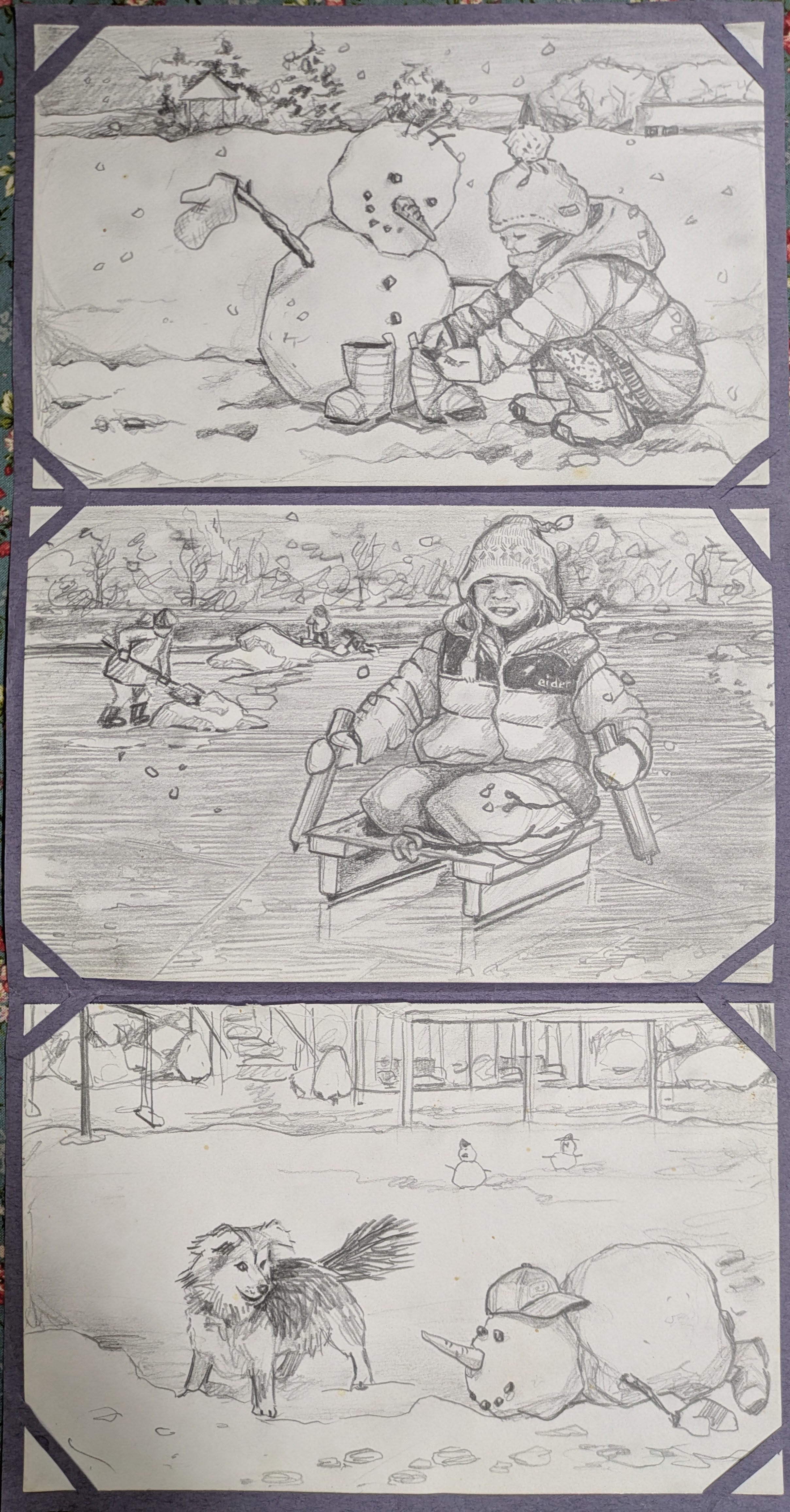
So now it’s February. Today is warm, but until now it’s been steadily cold, which has meant a lot of fun on ice. The Pyeongchang River runs just in front of Yeongwol community and we can’t pass a winter without an “ice festival” with everyone—except our dear ninety-some-year-old Haraboeji who prefers sitting by a warm, indoor fireplace.
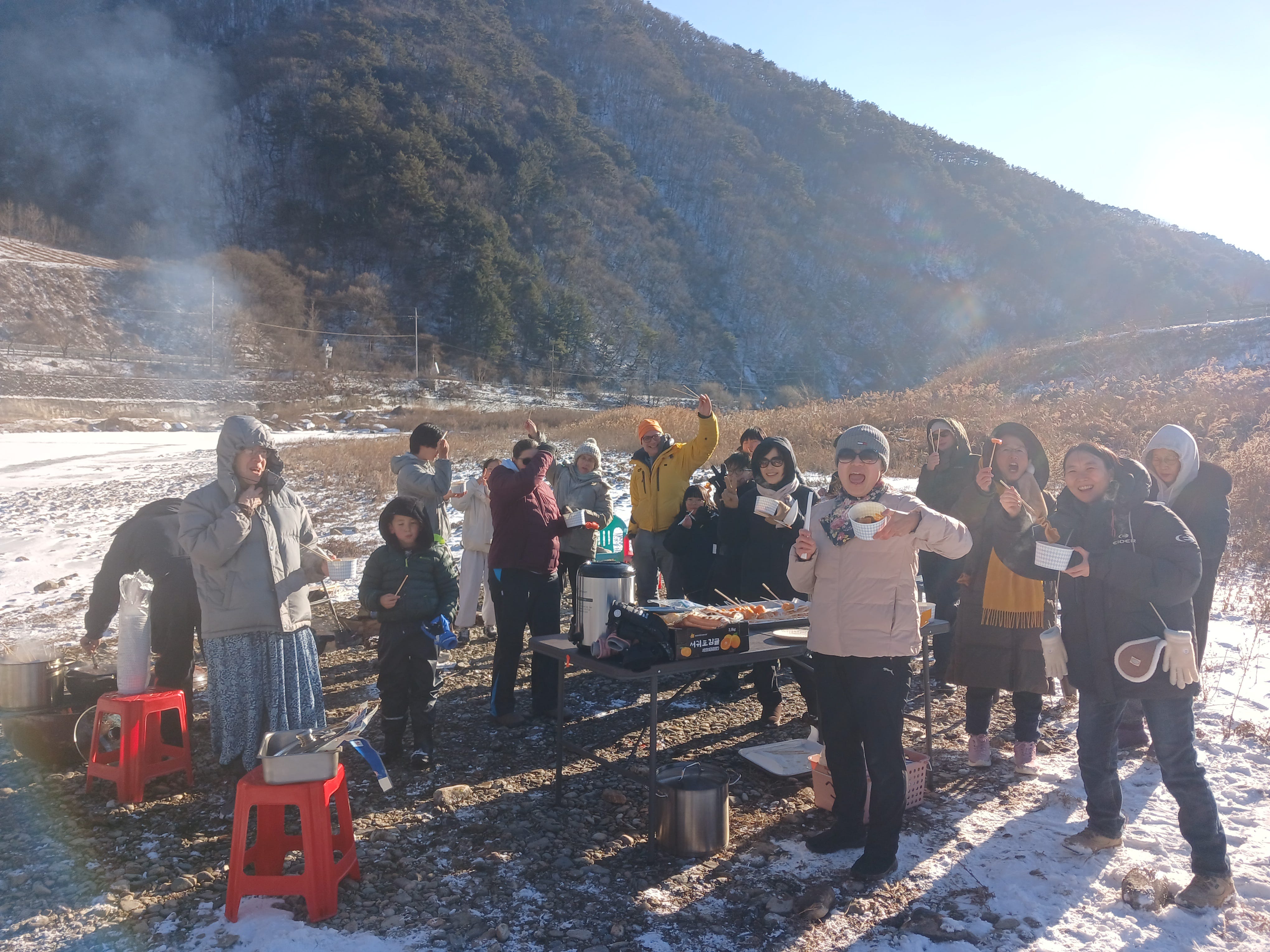
For some reason, we got an especially windy, cold day, and an especially bumpy ice surface. New sseolmae—썰매, ice sleds—were made for the occasion, and everyone from youngest to oldest, attempted to do some sliding on the ice. It was more of an upper-body workout, as you sat or knelt on the wooden board and tried to propel the sled forward with a pushing stick in each fist.
In between playing on the ice, we warmed ourselves around three fires on the pebbly river edge. We enjoyed tteokbokki (떡볶이, rice cakes in flavorful, spicy sauce), odeng soup (오뎅국, fish cakes on skewers in broth—street food style), soondae (순대, blood sausage), and tanghuru (탕후루) fruit —strawberries and peeled tangerines—coated in clear, crunchy candy syrup. An hour or more of merciless snowball fights, sincere attempts to slide along the ice on our sleds, lots of laughter and good food—that’s an ice festival. The moment when a thirteen-year-old pushed his luck and fell waist-deep in freezing water, or when a gust of wind knocked a whole fireplace over, pot of fishcakes, broth, and all. . . that makes it memorable.
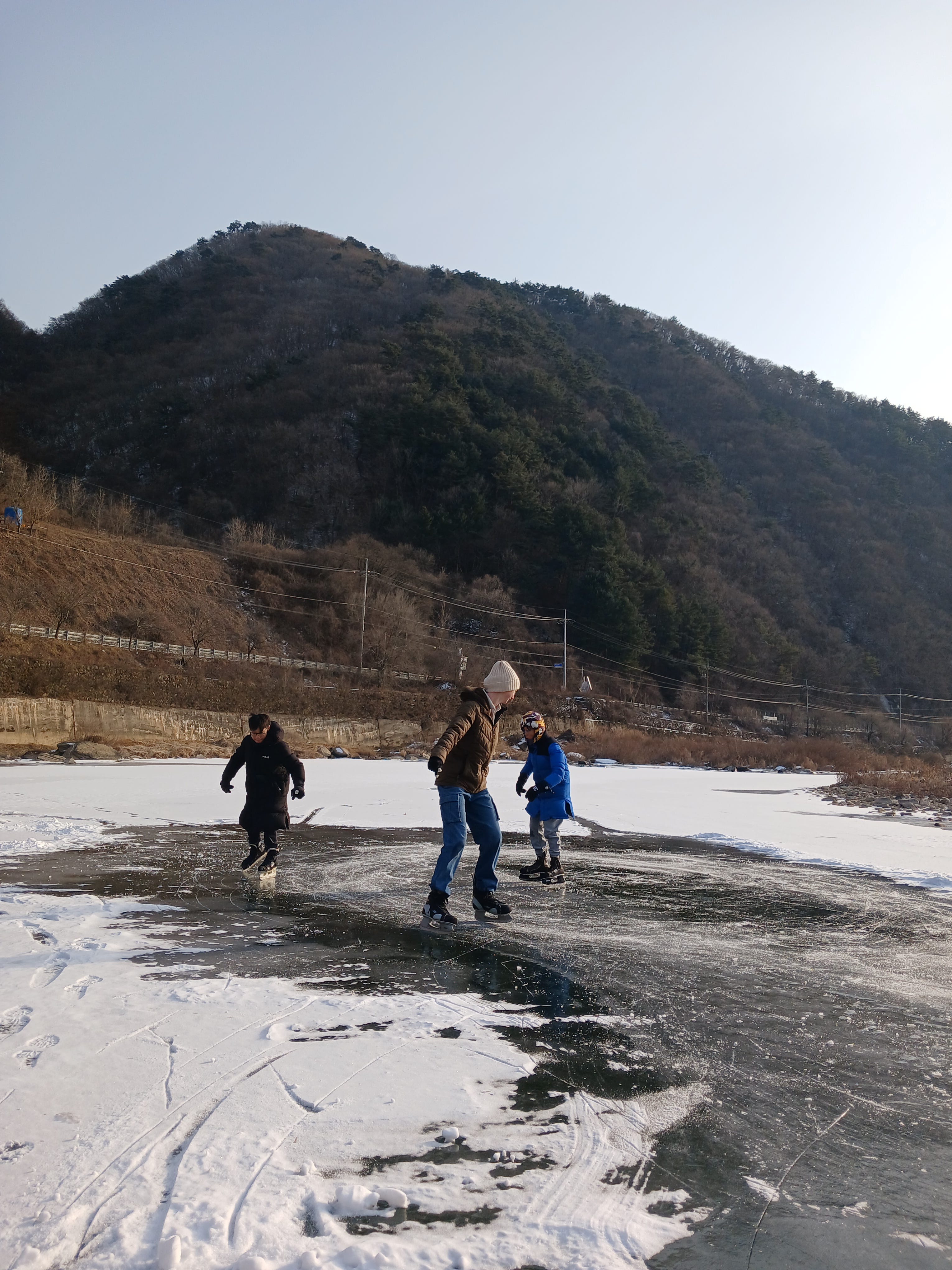
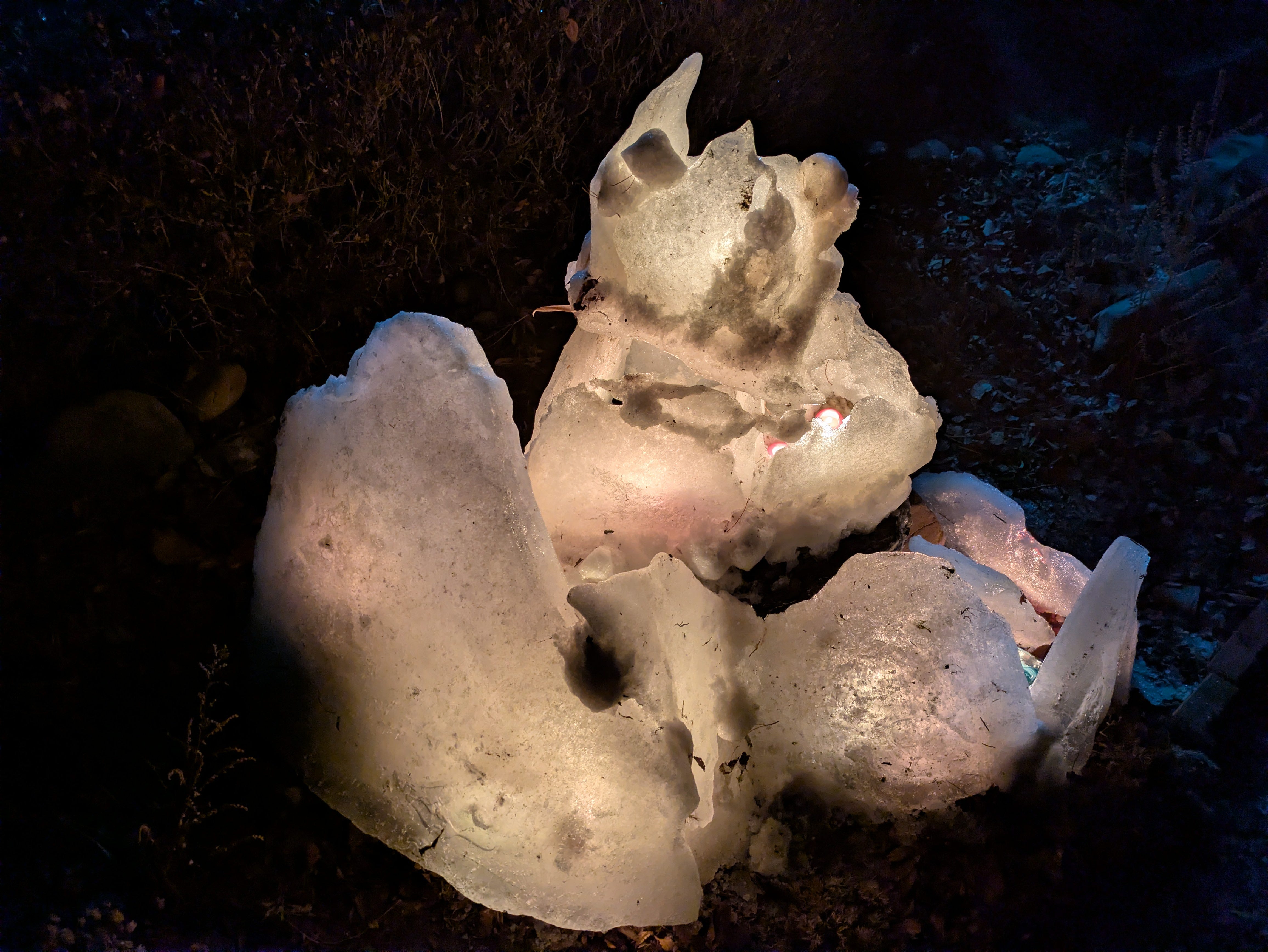
Usually, the adults miss the fun. I spend most of my week doing activities with the kids. I learn Korean, they learn English—it works. Thankfully, there’s usually another adult who can communicate better than I. In between practicing and making props for our upcoming dramatic performance of Tolstoy’s “Ivan the Fool”, we go out and enjoy nature. Popular activities include: games of tag while ice skating, stamping along the edge of the river trying to break off chunks of ice, soccer, snow sculpting (only twice because we haven’t had much snow this winter), and “hounds and hares”—an outdoor game in which one team goes somewhere to hide, leaving a trail for the other team to follow. This afternoon, we tried a new method of tying bits of cloth to bushes and trees. When two kids and I crossed our neighbor’s land, the kind old Haraboeji (grandpa) looked quite surprised and wondered what on earth we were doing, tying cloth here and there. The kids cheerfully explained. . . .
So that’s banghak, at least in Yeongwol community. The rest of this blog consists of photos. Enjoy~
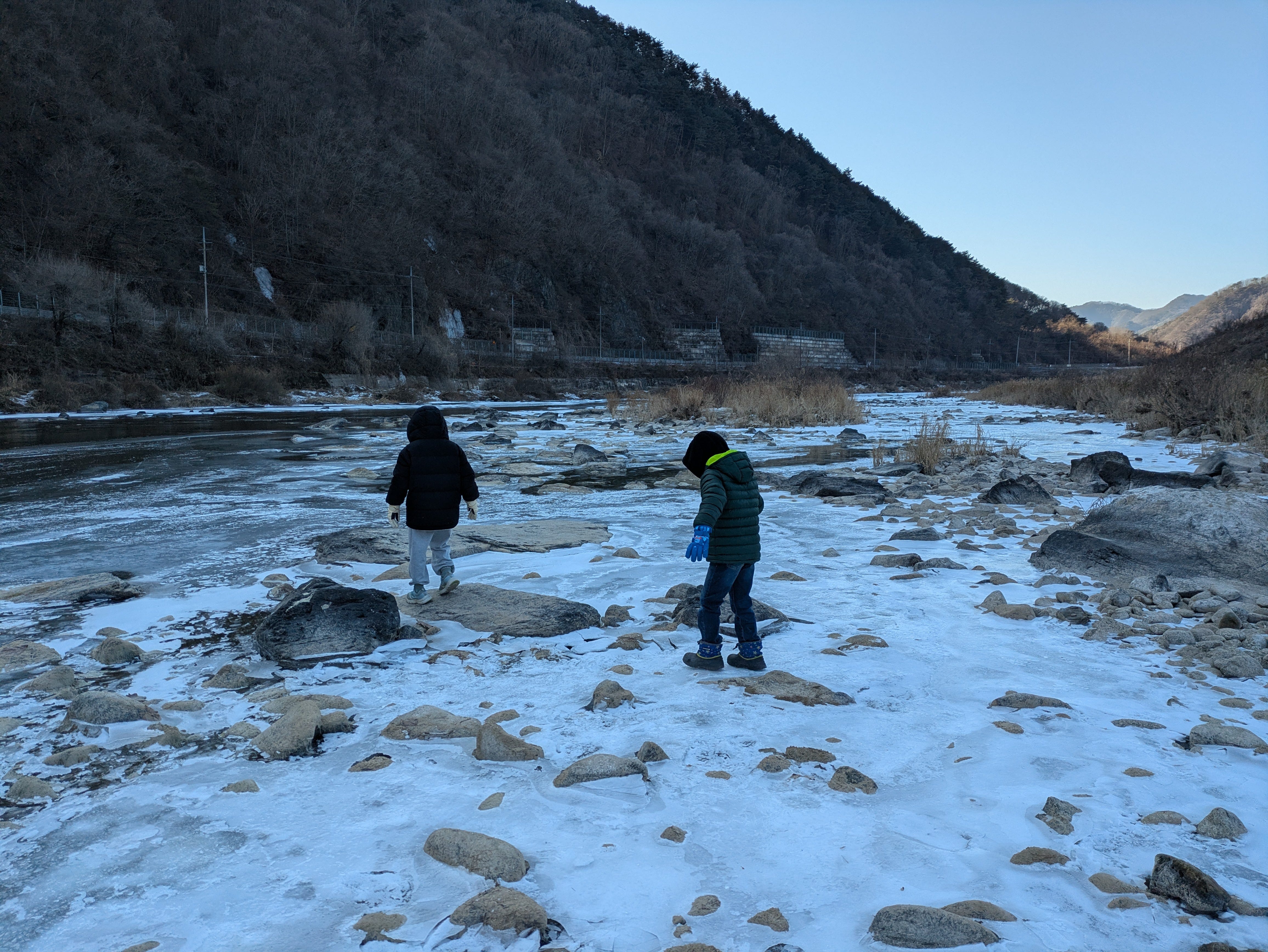
Ice is so fun!
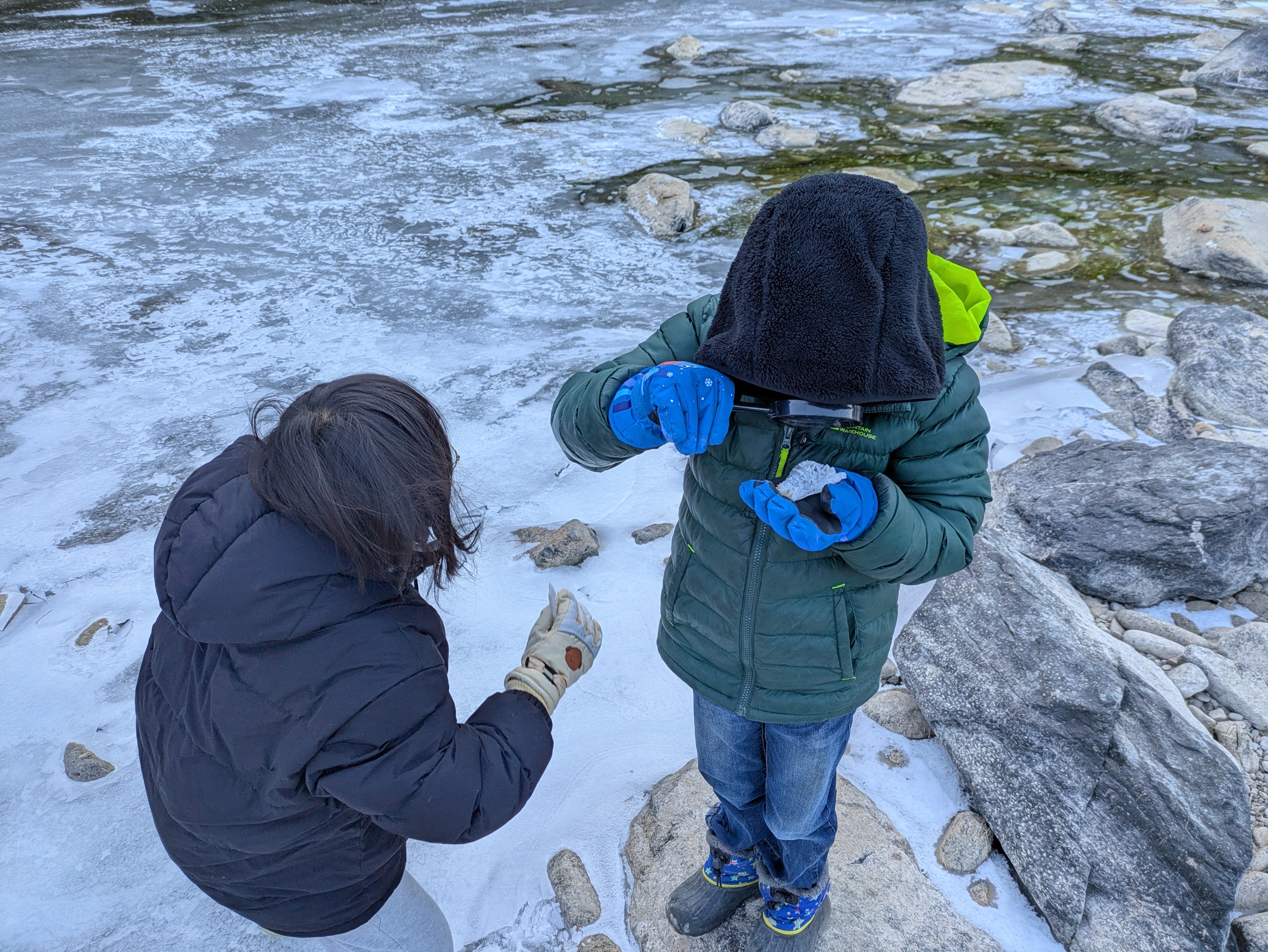


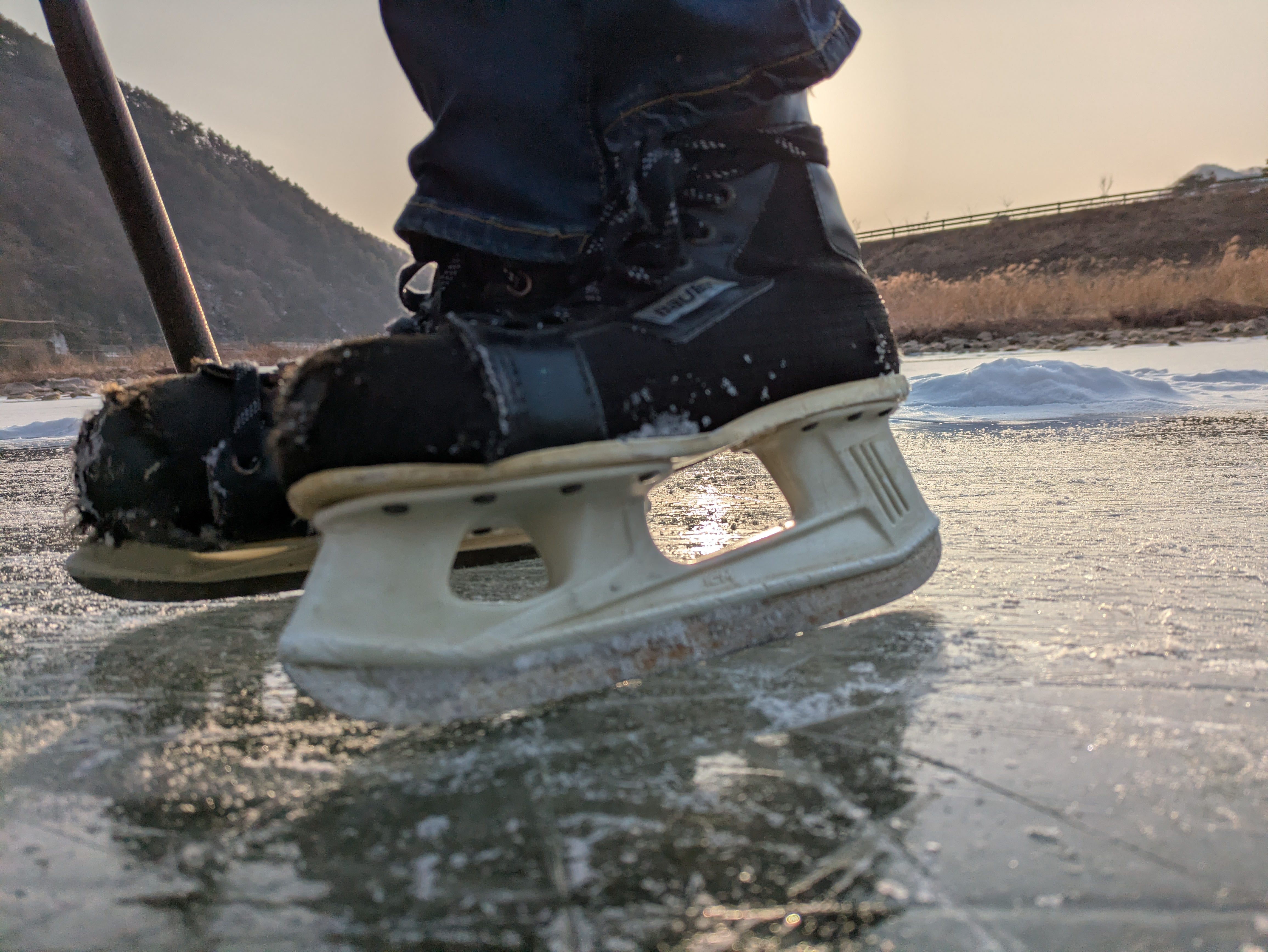
Mid-January when the ice was a little smoother, we received a timely gift of second-hand skates, freshly sharpened and sent by a friend in Spring Valley community.


I loved this.
Thanks Trudi! Sounds like a blast. Here the primroses are blooming already, but sometimes I miss real winter! The ice skating reminds me of my Connecticut childhood.